2026
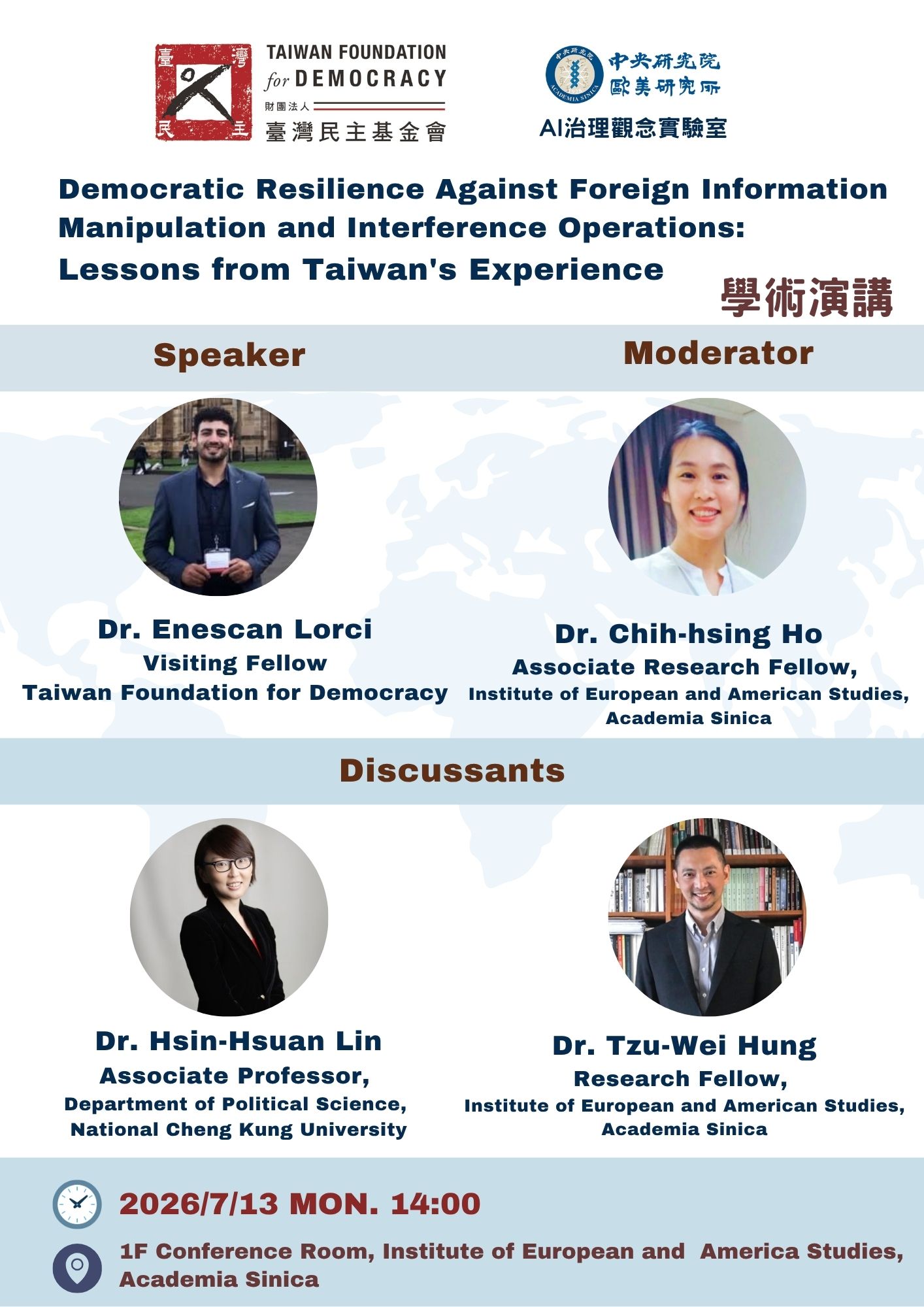
Democratic Resilience Against Foreign Information Manipulation and Interference Operations: Lessons from Taiwan's Experience
Co-hosted by the IEAS "AI Governance" Concept Lab and the Taiwan Foundation for Democracy. Speaker: Enescan Lorci, PhD (Visiting Fellow, Taiwan Foundation for Democracy) Discussants: Dr. Tzu-Wei Hung (Research Fellow, IEAS, Academia Sinica), Prof. Hsin-Hsuan Lin (Associate Professor, National Cheng Kung University) Moderator: Dr. Chih-Hsing Ho (Associate Research Fellow, IEAS, Academia Sinica) Time: 2:00 P.M. Monday, July 13, 2026. Venue: 1st Floor Conference Room, Institute of European and American Studies, Academia Sinica
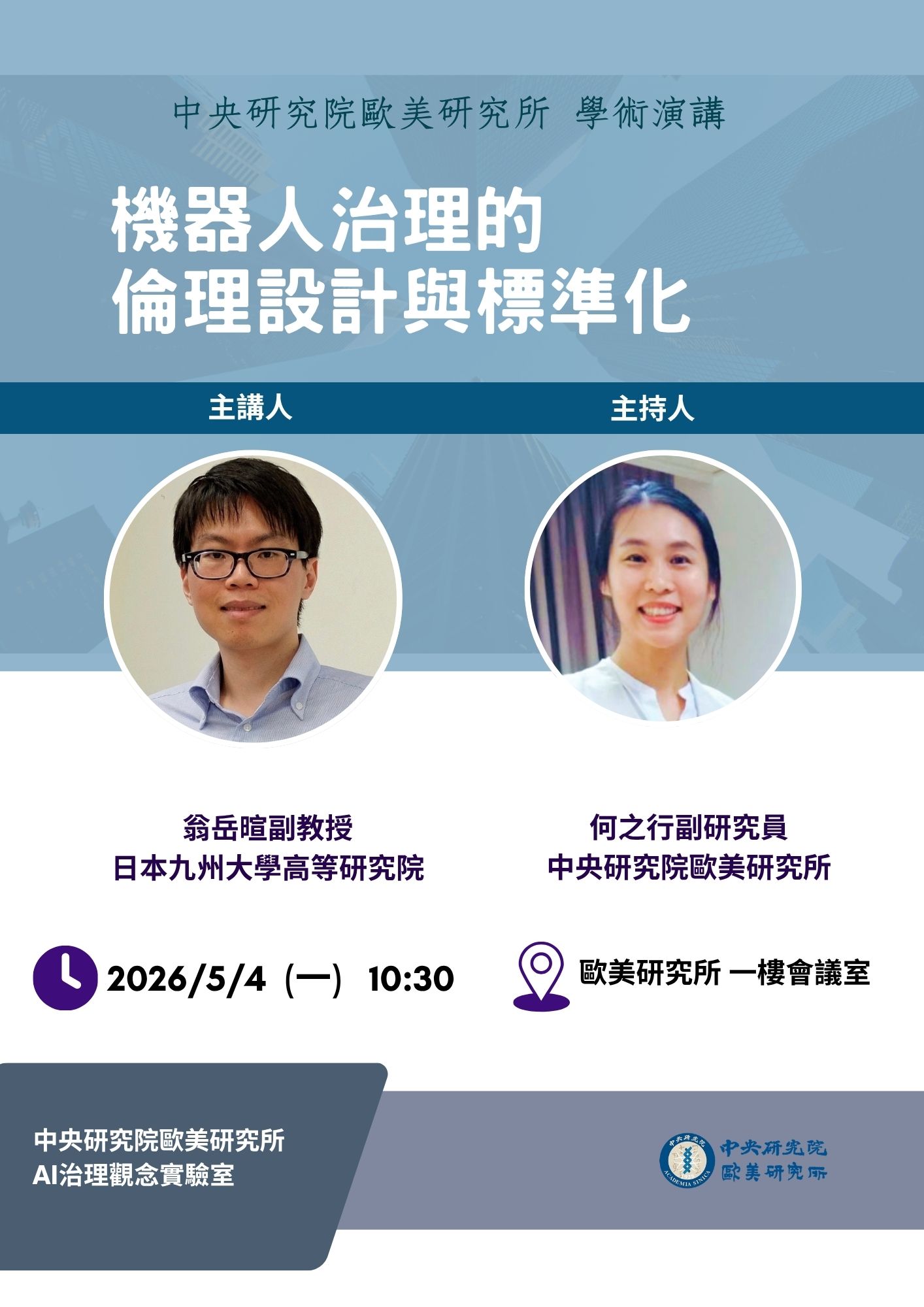
Ethical Design and Standardization in Robot Governance
Speakers: Yueh-Hsuan WENG (Associate Professor, Institute for Advanced Study, Kyushu University) Moderator: Dr. Chih-Hsing Ho (Associate Research Fellow, Institute of European and American Studies, Academia Sinica) Time: 10:30 A.M. Monday, May 4, 2026. Venue: 1st Floor Conference Room, Institute of European and American Studies, Academia Sinica Abstract: This presentation will explore the application of artificial intelligence (AI) ethical standards in the governance of intelligent robots. Specifically, it will focus on analyzing the widely discussed "AI Pacing Problem" and the feasibility of applying AI ethical standards. In addition to discussing the current application of robotics in Japanese society, this presentation also advocates for establishing a non-binding and flexible regulatory framework for human-robot interaction to ensure that stakeholders can manage the inherent ethical, legal, and social (ELSI) risks in everyday human-robot interactions. By incorporating AI ethical standards into the development process of humanoid and social robots, robot developers can integrate responsible innovation and research principles into soft law-based governance without conflicting with existing "hard laws" governing robots. This presentation will explore ethical robot design methodologies through two case studies, analyzing their potential and limitations.
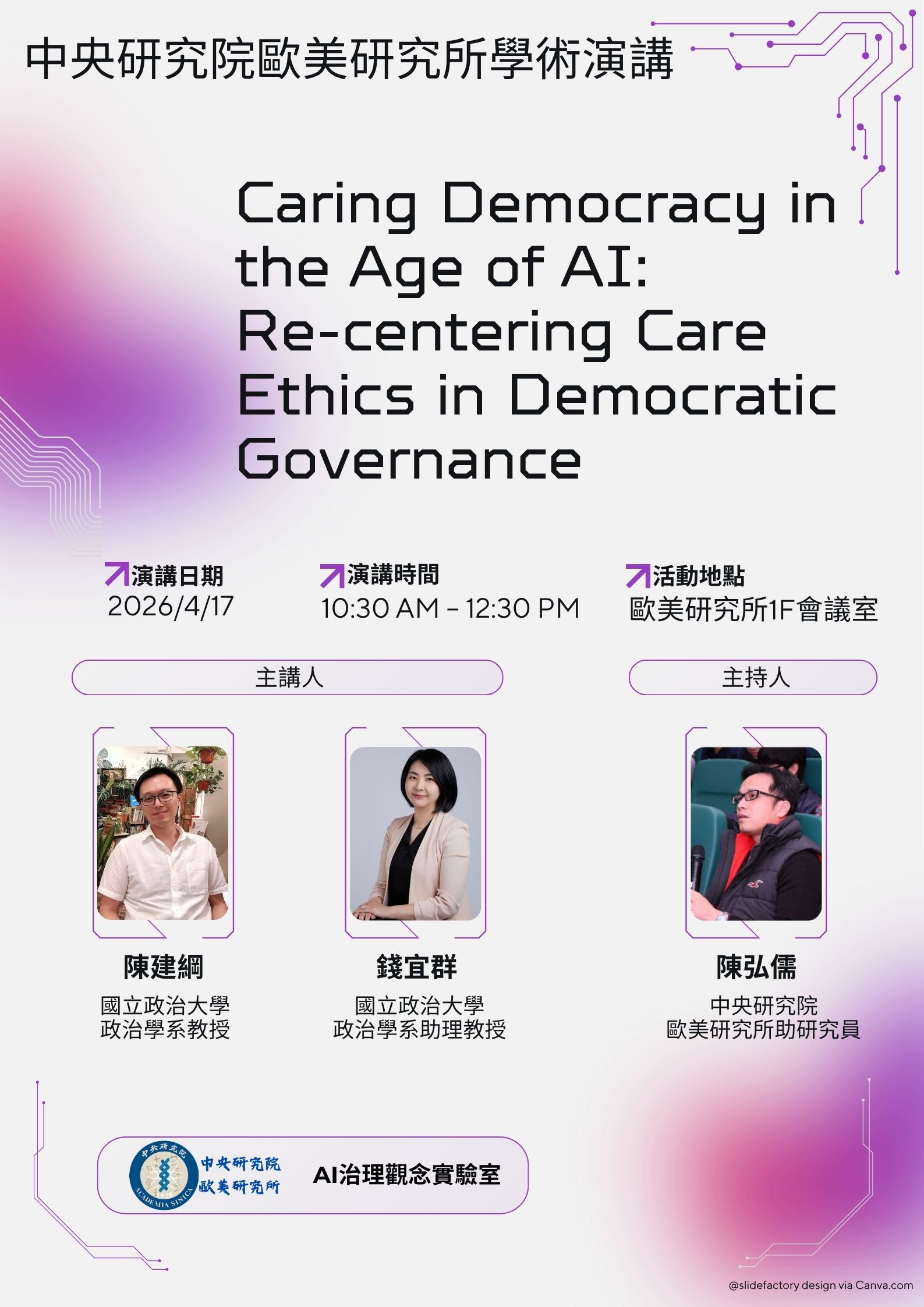
Caring Democracy in the Age of AI: Re-centering Care Ethics in Democratic Governance
Speakers: Brian Chen (Professor, Department of Political Science, National Chengchi University) Yi-Chun Chien (Assistant Professor, Department of Political Science, National Chengchi University) Moderator: Dr. Hung-ju Chen (Assistant Research Fellow, Institute of European and American Studies, Academia Sinica) Time: 10:30 A.M. Friday, April 17, 2026. Venue: 1st Floor Conference Room, Institute of European and American Studies, Academia Sinica Abstract: This paper reinterprets democratic governance through the lens of care ethics, exploring whether artificial intelligence can fix—or instead worsen—the ongoing "care deficit" that liberal democracies have long experienced. Drawing on the care ethics literature, we contend that liberal-procedural models of democracy render dependency, interdependence, and vulnerability over time politically invisible, while shifting care responsibilities into gendered and racialized labor markets. They also valorize participatory citizenship that caregivers often lack time for and normalize market-based substitutes for public care. By integrating care ethics with procedural democratic theory, we show how procedural elements, often seen as ideal, tend to prioritize rational autonomy and discursive equality while neglecting the embodied, emotional, and temporal aspects of political life. We contend that a democracy attentive to care must expand its normative focus beyond procedural inclusion to emphasize relational responsiveness. To address these gaps, we propose four care-centered democratic capacities—attentiveness, responsibility, competence, and responsiveness—along with answerability, as criteria for assessing institutions, technologies, and accountability measures. We also develop a care-ethical framework for design and oversight that involves co-design with caregivers, public-interest data infrastructures, algorithmic impact assessments aligned with due process, and time-based social rights such as care income or care credits. The paper concludes with a reform agenda for care-oriented AI and democratic renewal, stressing that only by re-centering care can democracies resist the dehumanizing effects of technological automation competition. Keywords: care ethics; procedural democracy; AI governance; democratic repair; social reproduction
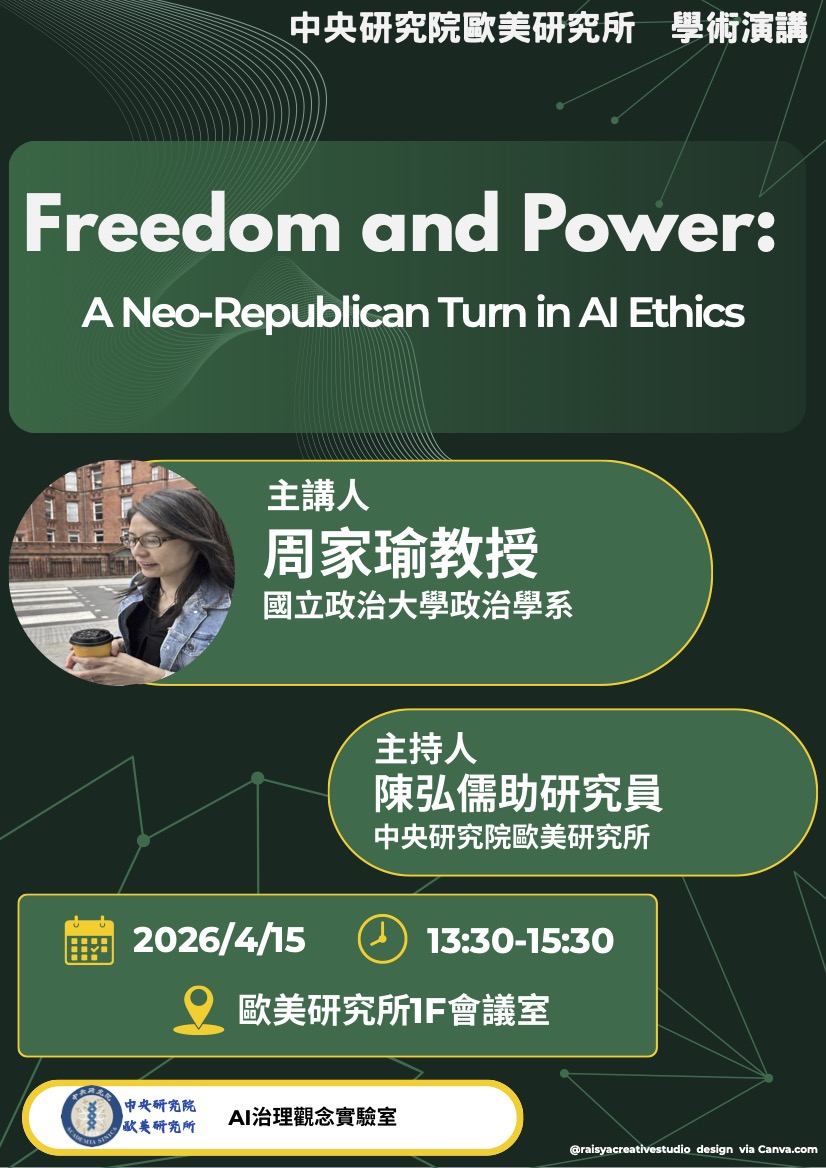
Freedom and Power: A Neo-Republican Turn in AI Ethics
Speaker: Prof. Chia-yu Chou (Professor, Department of Political Science, National Chengchi University) Moderator: Dr. Hung-ju Chen (Assistant Research Fellow, Institute of European and American Studies, Academia Sinica) Time: 1:30 P.M. Wednesday, April 15, 2026. Venue: 1st Floor Conference Room, Institute of European and American Studies, Academia Sinica Abstract: This article explores the ethical and political implications of artificial intelligence (AI) through the lens of intellectual history. Starting with a neo-republican turn in AI ethics, it poses the fundamental question: Can individuals retain freedom under such powerful technological structures? The answer, I contends, depends upon the conception of freedom adopted. Contemporary AI ethics and regulation often presuppose a liberal understanding of liberty as negative liberty (mere non-interference) which prioritises harm prevention and technical solutions to issues such as bias and discrimination. Nonetheless, this framework, rooted in Thomas Hobbes's political thought, proves inadequate for addressing the subtler forms of domination exerted by algorithmic power, including micro-domination through data collection, personalised nudges, and uncontrolled corporate influence over decision-making processes. By contrast, the republican tradition, as reconstructed by scholars such as Quentin Skinner and Philip Pettit, conceives liberty as non-domination; that is, freedom should be defined not merely from actual interference but from subjection to arbitrary power. Tracing the genealogy of these rival conceptions to the seventeenth-century debates between Hobbes and English republicans, the article indicates how Hobbes deliberately redefined liberty as absence of external impediments to render it compatible with absolute sovereignty, thereby depoliticising the concept. In sum, contextualising neo-republicanism historically reveals its superior analytical and normative resources for AI ethics. Ultimately, the article advocates shifting the focus from questions of fairness or goodness to how AI redistributes power, urging institutional designs that mitigate domination and foster genuine independence.
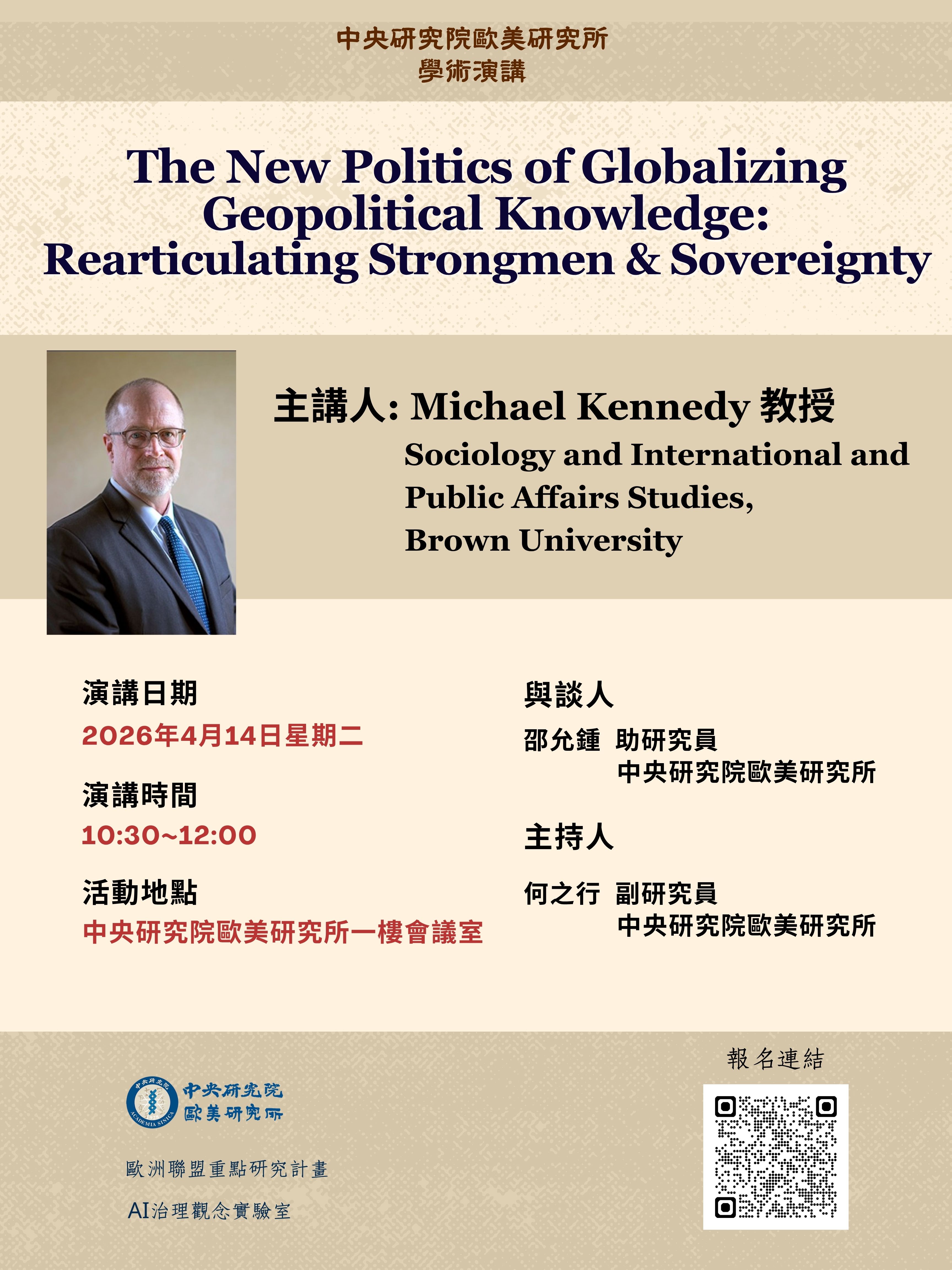
The New Politics of Globalizing Geopolitical Knowledge: Rearticulating Strongmen & Sovereignty
Speaker: Prof Michael Kennedy (Sociology and International and Public Affairs Studies, Brown University) Panlist: Dr. Yung-Djong Shaw (Assistant Research Fellow, Institute of European and American Studies, Academia Sinica) Moderator: Dr. Chih-hsing Ho (Associate Research Fellow, Institute of European and American Studies, Academia Sinica) Time: 10:30 A.M. ~ 12:00 P.M. Tuesday, April 14, 2026. Venue: 1st Floor Conference Room, Institute of European and American Studies, Academia Sinica Abstract: How has the last decade amplified and challenged the themes of Kennedy’s 2015 book, Globalizing Knowledge? First discussed publicly at Singapore Management University in that year, we can see that concerns over intellectual responsibility and university accountability abide. However, changes in American and global power relations, anticipated by Russia’s invasion of Ukraine but finding new fulfillment in the proliferation of strongmen politics elsewhere, challenge how academic freedom is to be conceived and the politics of diversity and inclusion articulated. Kennedy draws on his own Brown University’s experience to characterize the recent past & anticipate alternative futures.
2025
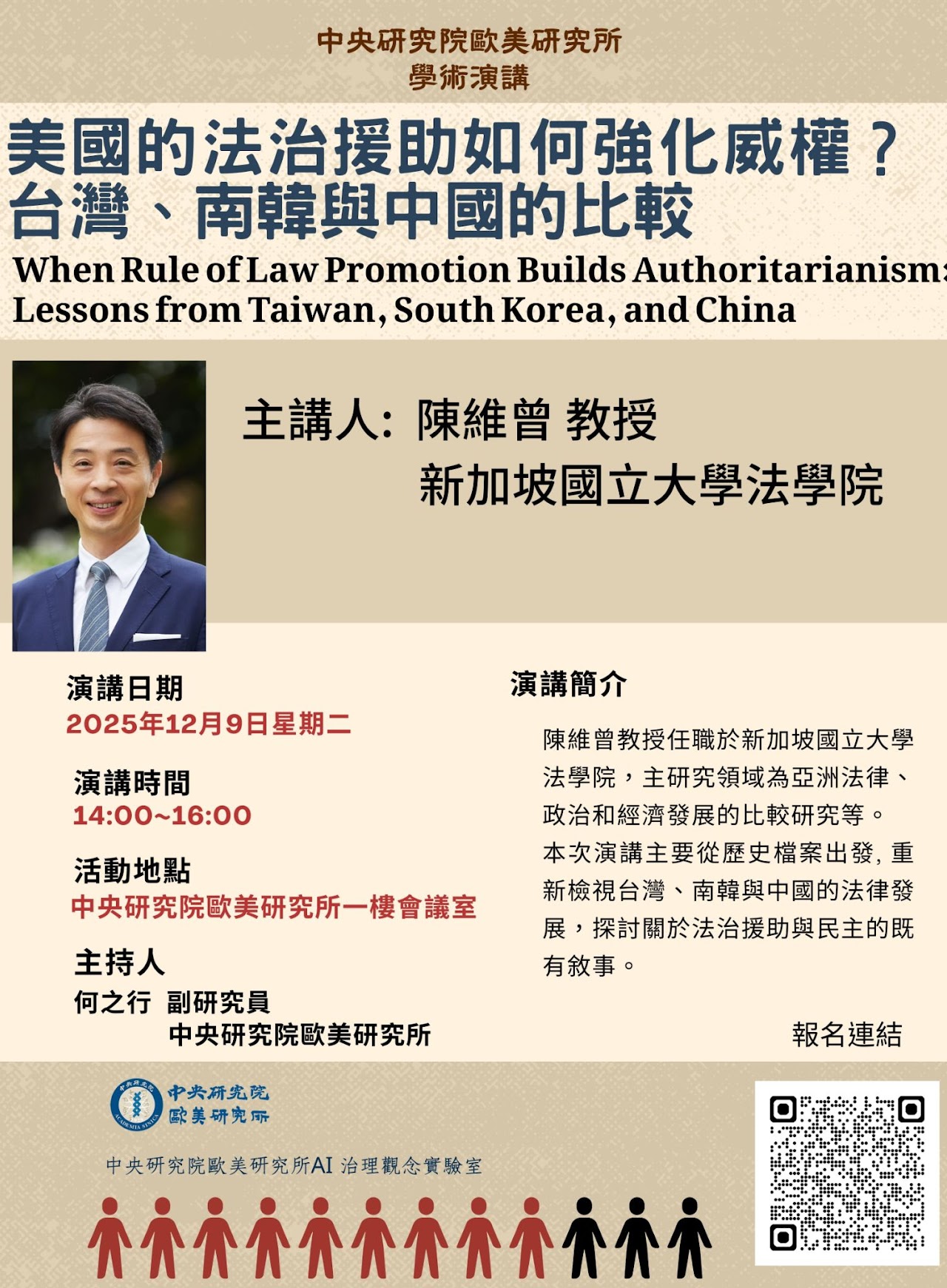
When Rule of Law Promotion Builds Authoritarianism: Lessons from Taiwan, South Korea, and China
Speaker: Prof Weitseng Chen (National University of Singapore School of Law) Moderator: Dr. Chih-hsing Ho (Associate Research Fellow, Institute of European and American Studies, Academia Sinica) Time: 14:00~16:00 P.M. Tuesday, December 9, 2025. Venue: 1st Floor Conference Room, Institute of European and American Studies, Academia Sinica Abstract: For decades, Taiwan and South Korea have been hailed as success stories of how strengthening the rule of law can help authoritarian regimes transition to democracy. But why has the international community’s annual investment of tens of billions of dollars in legal aid, in an effort to replicate this success story, resulted in democratic backsliding over the past two decades? This lecture revisits the legal development of Taiwan, South Korea, and China from historical archives, challenging existing narratives about rule of law promotion and democracy. The research identifies two paradigms of international rule of law aid: the “state-first” model during the Cold War and the “democracy-first” model after the Cold War. These two models differ in form but are similar in effect: international rule of law aid often strengthens rather than loosens authoritarian rule. The democratization of Taiwan and South Korea is not evidence of modernization theory but an exception. Future rule of law aid must be redesigned or it may continue to be a governance tool that strengthens authoritarian resilience.
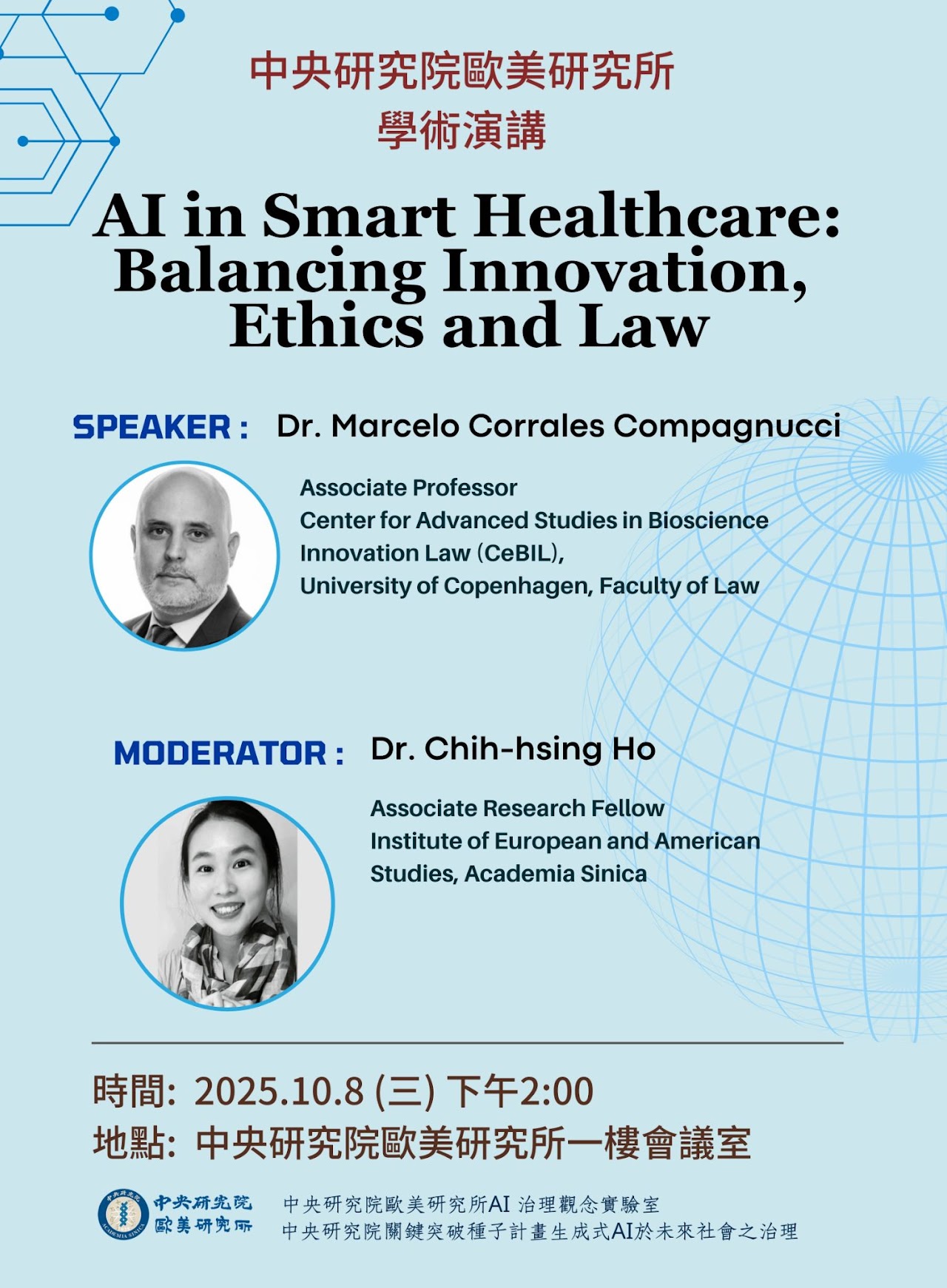
AI in Smart Healthcare: Balancing Innovation, Ethics and Law
Speaker: Dr. Marcelo Corrales Compagnucci (Associate Professor, Center for Advanced Studies in Bioscience Innovation Law (CeBIL), University of Copenhagen, Faculty of Law) Moderator: Dr. Chih-hsing Ho (Associate Research Fellow, Institute of European and American Studies, Academia Sinica) Time :14:00~16:00 P.M. Wednesday , October 8, 2025. Venue:1st Floor Conference Room, Institute of European and American Studies, Academia Sinica Abstract: Smart healthcare is advancing rapidly, transforming hospitals into digital platforms and creating new ecosystems with startups and global technology leaders. These developments promise faster diagnoses, more personalised care and greater efficiency, but also raise urgent questions about privacy, accountability and trust. This presentation explores how innovation in AI for health is moving faster than regulation, with a focus on data protection requirements and cybersecurity standards. The session concludes with practical strategies for responsible innovation, drawing on legal and ethical guidelines as well as relevant ISO standards to support transparency, patient protection and public trust in smart healthcare ecosystems. Marcelo Corrales Compagnucci is Associate Professor and Associate Director at the Center for Advanced Studies in Bioscience Innovation Law (CeBIL), Faculty of Law, University of Copenhagen in Denmark. He is also Inter-CeBIL Research Affiliate at the Petrie-Flom Center for Health Law Policy, Biotechnology, and Bioethics at Harvard Law School. His research interests are the ethical and legal issues involved in disruptive innovation technologies and biomedicine, in particular privacy, data protection and AI governance. He is also the founder of CORCOM IT Law Consulting. He has a Doctor of Laws (LL.D.) degree from Kyushu University in Japan. He also holds a Master of Laws (LL.M.) in international economics and business law from Kyushu University, and an LL.M. in law and information technology and an LL.M. in European intellectual property law, both from the University of Stockholm in Sweden. He has several publications in the field of IT and Bioscience Law.
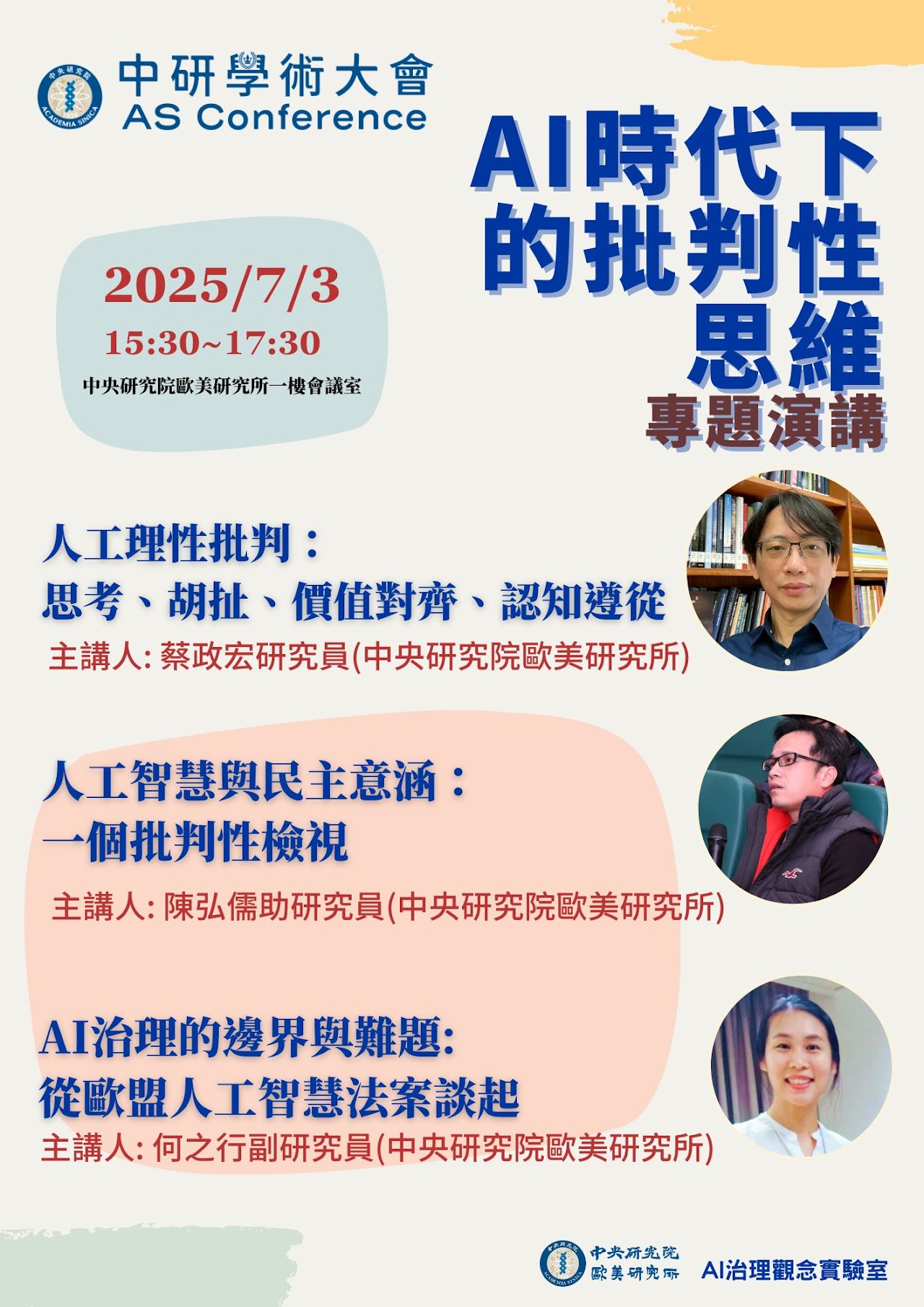
AS Conference: Critical Thinking in the AI Era
Time: 3:30~5:30 P.M., Thursday, July 3, 2025 Venue: 1F Conference Room, Institute of European and America Studies, Academia Sinica Speaker I: Dr. Cheng-Hung Tsai Research Fellow, Institute of European and American Studies, Academia Sinica Title: A Critique of Artificial Reason: Thinking, Bullshit, Value Alignment, and Epistemic Deference Speaker II: Dr. Hung-Ju Chen Assistant Research Fellow, Institute of European and American Studies, Academia Sinica Title: AI and the Democratic Value- A Critical Perspective from the Freedom of Speech Speaker III: Chih-hsing Ho Associate Research Fellow, Institute of European and American Studies, Academia Sinica Title: The Boundaries and Challenges of AI Governance: Reflections from the EU AI Act Link to agenda: https://drive.google.com/file/d/1E63HdUzMoOra7JL9kGWpXWwbvqKLPzdT/view
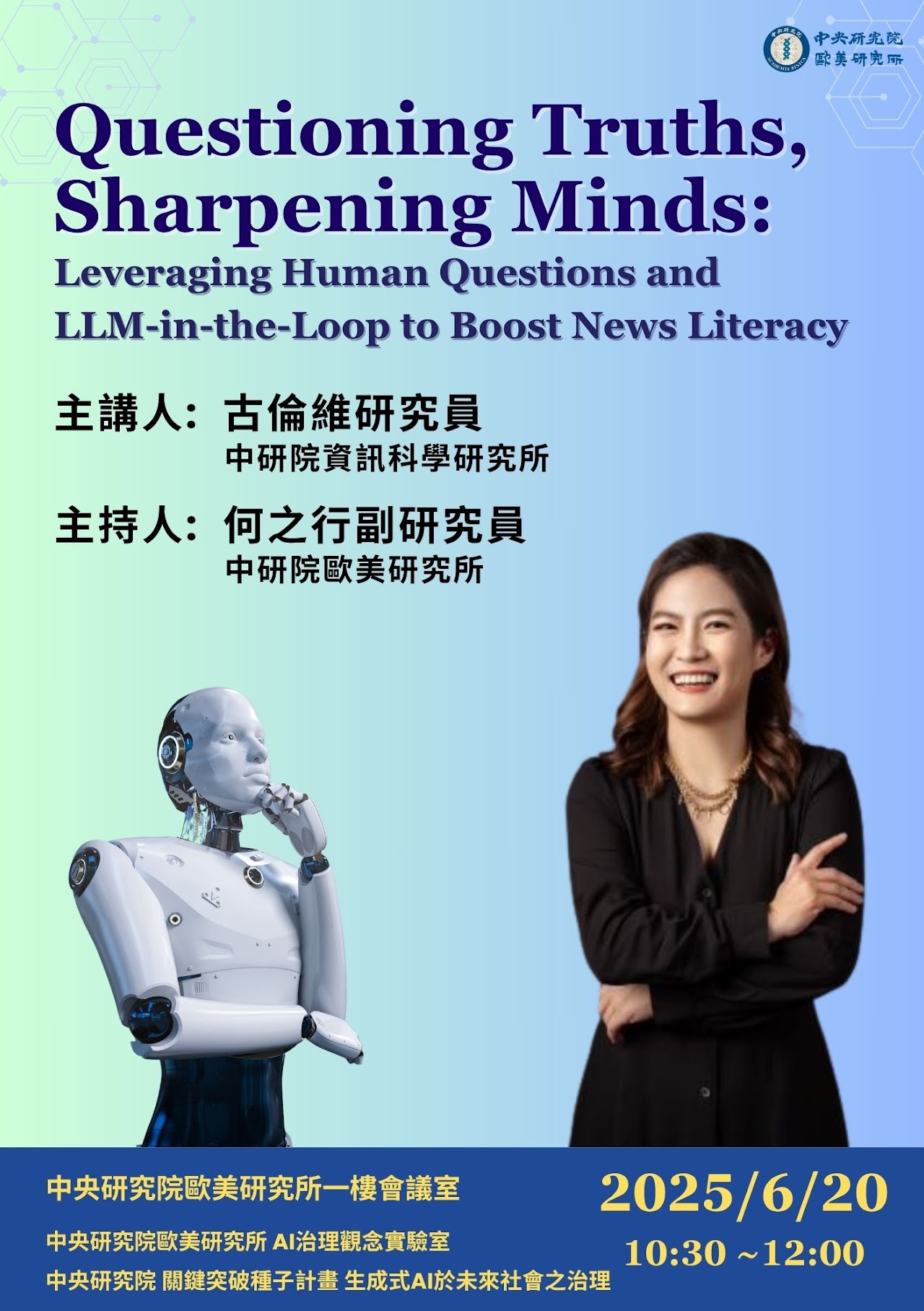
Questioning Truths, Sharpening Minds: Leveraging Human Questions and LLM-in-the-Loop to Boost News Literacy
Topic: "Questioning Truths, Sharpening Minds: Leveraging Human Questions and LLM-in-the-Loop to Boost News Literacy" Speaker: Dr. Lun-wei Ku, Research Fellow, Institute of Information Science, Academia Sinica Moderator: Dr. Chih-hsing Ho (Associate Research Fellow, Institute of European and American Studies, Academia Sinica) Abstract: Fake news is not just a technological problem—it’s a cognitive challenge. This talk presents an interactive system that leverages human inquiry to iteratively enhance explanations provided by a large language model for questionable news stories. By treating explanation generation as a dialogue, the system encourages users to ask clarifying questions, raise objections, and offer comments, prompting the AI to refine its responses in real time. With each round of Q&A, the explanations become increasingly complete, transparent, and tailored to users’ concerns. Our findings reveal that this question-driven process significantly shapes explanations. Thoughtful questions can help uncover the truth behind false claims—highlighting inconsistencies and providing enlightening context to debunk misinformation. Although the AI’s responses, influenced by its underlying knowledge and reasoning abilities, could potentially lead to misunderstandings, the overall risk of harm remains minor. Ultimately, the interactive questioning process significantly enhances the persuasiveness and clarity of generated explanations. Looking forward, we envision the system becoming a hands-on educational tool. In classroom settings, it can serve as a debate partner, presenting controversial news claims and engaging students in lively Q&A exchanges. The system actively prompts students to challenge AI statements, demand evidence, and identify logical fallacies, fostering essential news literacy skills. For students unfamiliar with debate practices, the AI can also demonstrate an automated argumentative process, serving as a helpful teaching assistant. This playful yet informative format transforms passive news consumption into active critical investigation, making lessons about misinformation both enjoyable and impactful. Date & Time: Friday, June 20, 2025, 10:30 AM Venue: 1st Floor Conference Room, Institute of European and American Studies, Academia Sinica
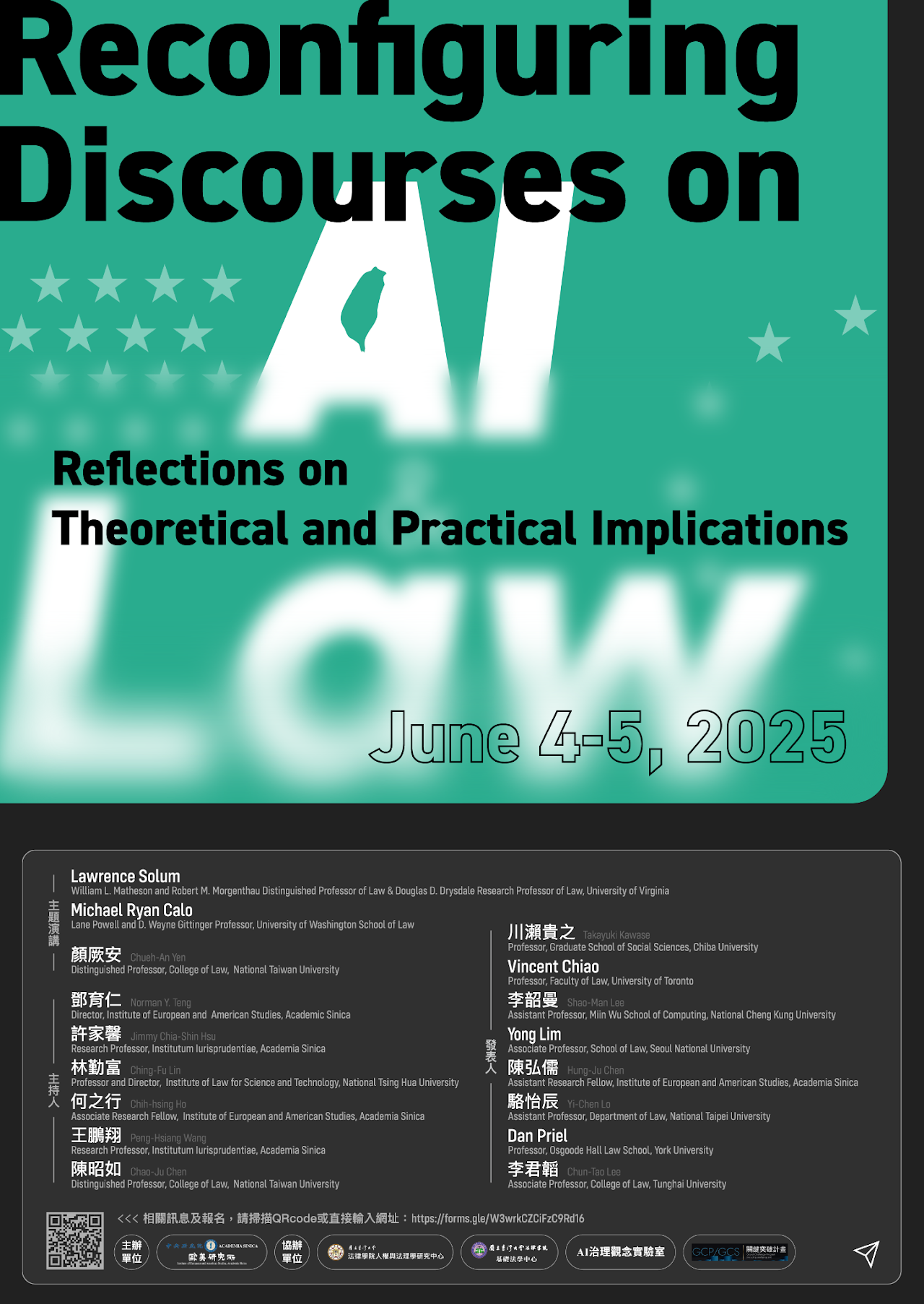
Reconfiguring Discourses on AI & Law: Reflections on Theoretical and Practical Implications
Date: June 4-5, 2025 (Wednesday-Thursday) Venue: 1st Floor Conference Room, Institute of European and American Studies, Academia Sinica Secretary-General: Dr. Hung-Ju Chen
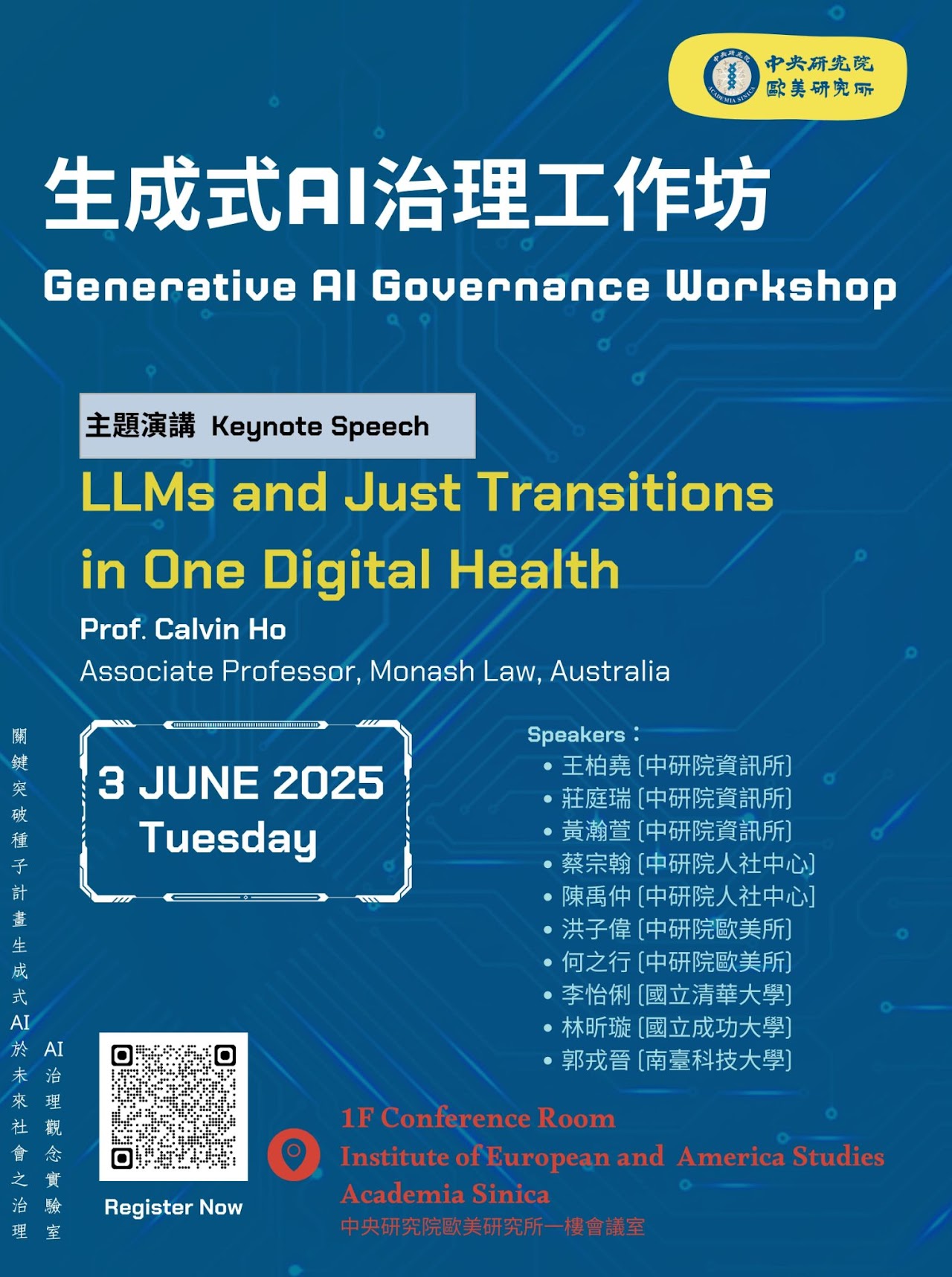
Generative AI Governance Workshop
Date: Tuesday, June 3, 2025 Venue: 1F Conference Room, Institute of European and American Studies, Academia Sinica Keynote Speaker: Prof. Calvin Ho (Associate Professor, Monash Law) Topic: "LLMs and Just Transitions in One Digital Health" Speakers: Dr. Bow-Yaw Wang (Research Fellow/ Institute of Information Science, Academia Sinica) Dr. Tyng-Ruey Chuang (Associate Research Fellow/ Institute of Information Science, Academia Sinica) Dr. Hen-Hsen Huang (Associate Research Fellow/ Institute of Information Science, Academia Sinica) Dr. Tzong-Han Tsai (Research Fellow/ Research Center for Humanities and Social Sciences, Academia Sinica) Dr. Alvin Chen (Associate Research Fellow/ Research Center for Humanities and Social Sciences, Academia Sinica) Dr. Tzu-Wei Hung (Research Fellow / Institute of European and American Studies, Academia Sinica) Dr. Chih-hsing Ho (Associate Research Fellow / Institute of European and American Studies, Academia Sinica) Dr. Yi-Li Lee (Associate Professor / Institute of Law for Science and Technology, National Tsing Hua University) Dr. Hsin-Hsuan Lin (Assistant Professor/ Department of Political Science, National Cheng Kung University) Dr. Jung-Chin Kuo (Associate Professor / Institute of Financial & Economic Law (IFEL), Southern Taiwan University of Science & Technology (STUST) Link to agenda: <a href="https://www.ea.sinica.edu.tw/Admin/ashx/GetFile.ashx?ID=57052" target="_blank" rel="noopener noreferrer">https://www.ea.sinica.edu.tw/Admin/ashx/GetFile.ashx?ID=57052</a>
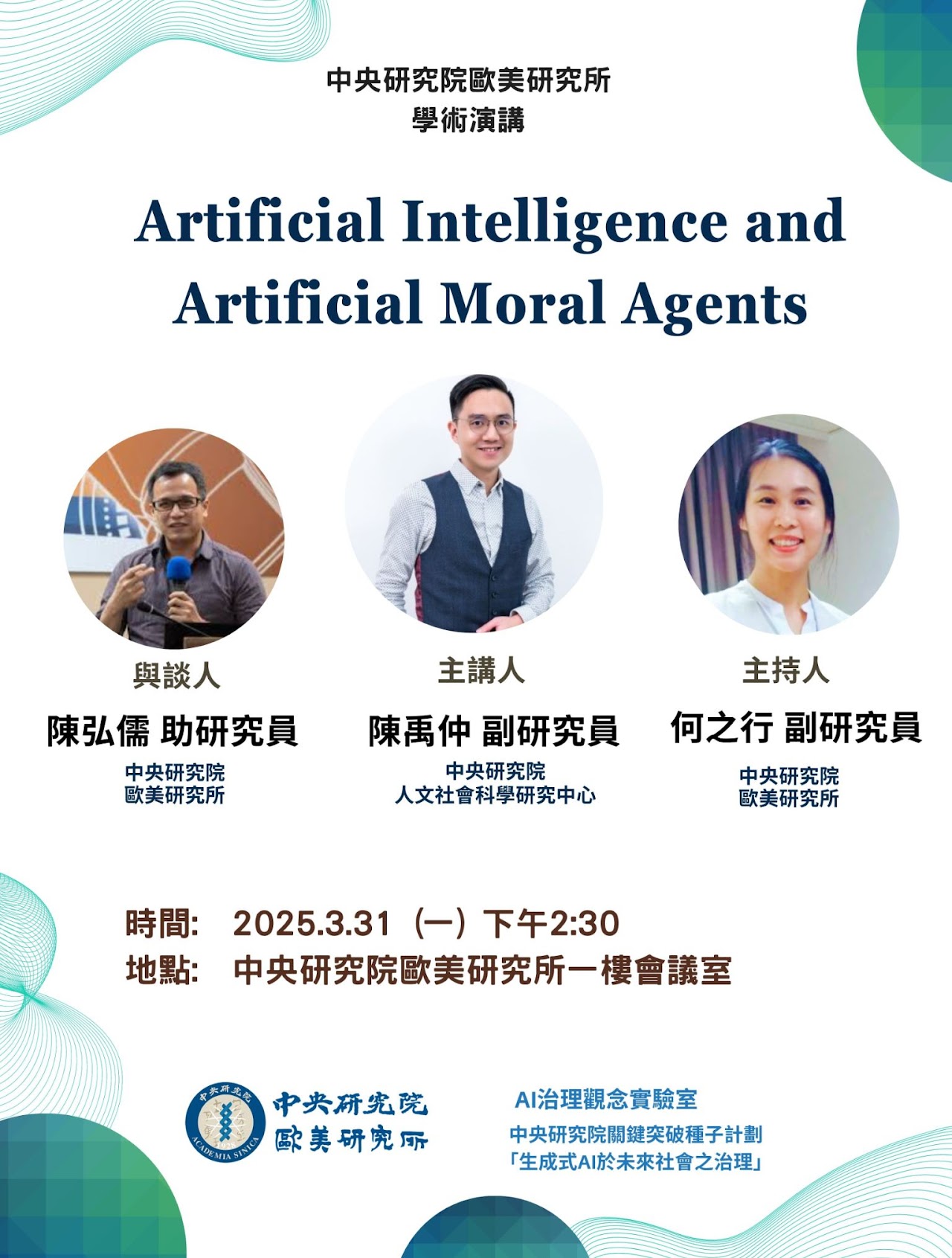
Artificial Intelligence and Artificial Moral Agents
Topic: "Artificial Intelligence and Artificial Moral Agents" Speaker: Dr. Alvin Chen, Associate Research Fellow, Research Center for Humanities and Social Sciences, Academia Sinica Moderator: Dr. Chih-hsing Ho / Associate Research Fellow, Institute of European and American Studies, Academia Sinica Discussant: Dr. Hung-Ju Chen / Assistant Research Fellow, Institute of European and American Studies, Academia Sinica Abstract: With the recent development of generative artificial intelligence, questions like “Can AI be responsible of its wrongs?” and “if can, how?” become increasingly pressing; the so-called “responsibility gap”. These questions are mostly framed in terms familiar to the field of machine ethics, a field of studies emphasizing ethical reflections on the development of machines. But conceptions of artificial agent with moral capacity in legal and political theory predates the emergence of machine ethics and the development of generative AI. This paper argues that the so-called “responsibility gap” exists only because of the account of artificial agent in machine ethics. It shows that, once insights from legal and political philosophy are taken, there will be a much clearer understanding of the characters of artificial moral agents and a less troubling undertaking of the responsibility of AI. In terms of specifics, the paper addresses the following tripartite question: Is AI an artificial moral agent? If it is, what kind of artificial moral agent is it? Why does it matter for AI to be an artificial moral agent? An answer to the third part of this question quintessentially presents a response to the “responsibility gap” by reassessing how AI can take responsibility. The paper concludes with reflections on its practical implications, notably to AI in medicine. Keywords: Artificial Intelligence (AI), Artificial Moral Agents (AMAs), responsibility gap, rational belief, relational responsibility Date & Time: Monday, March 31, 2025, 2:30 PM Venue: 1F Meeting Room, Institute of European and American Studies, Academia Sinica
2024
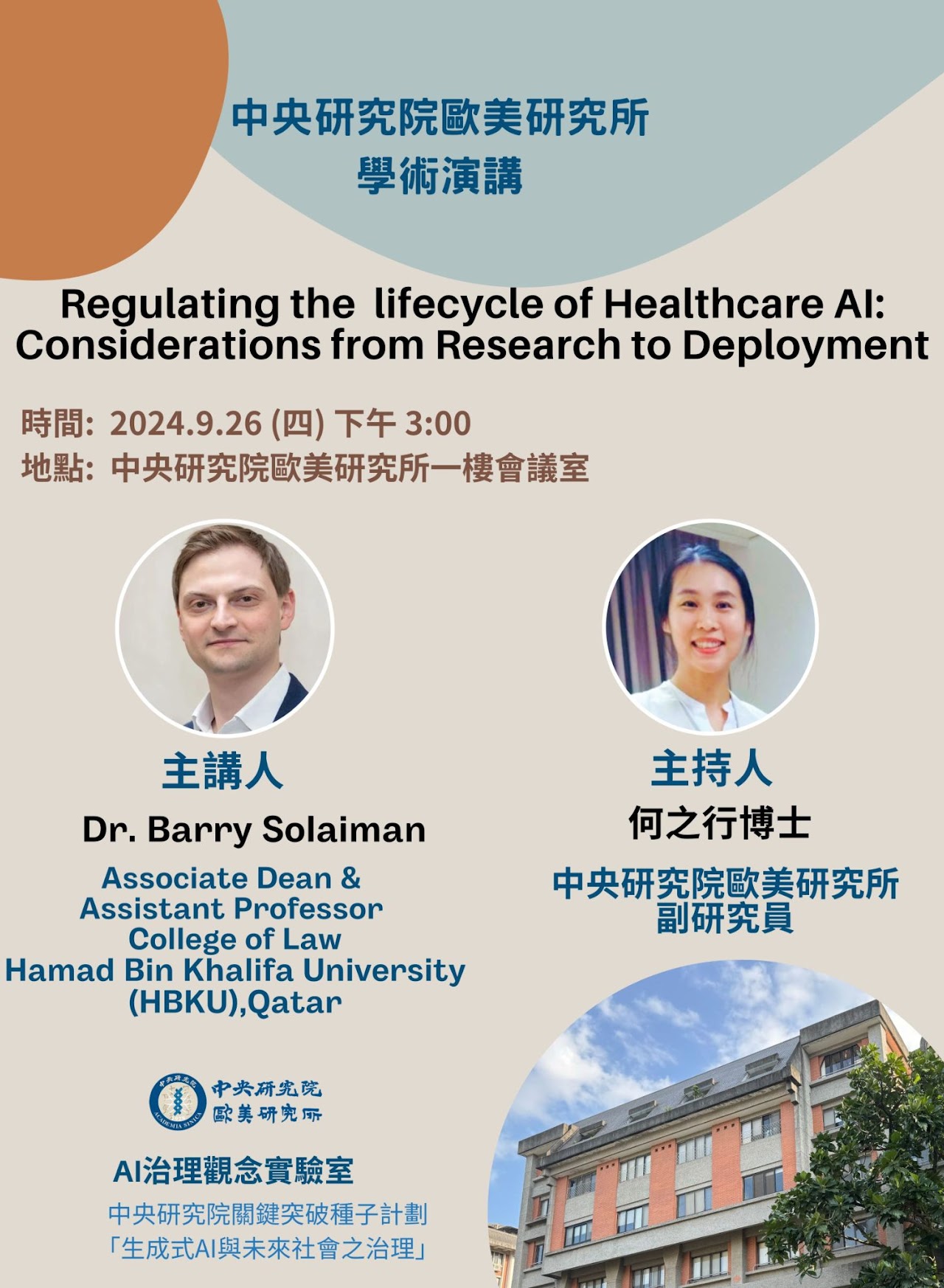
Regulating the lifecycle of Healthcare AI: Considerations from Research to Deployment
Topic: "Regulating the Lifecycle of Healthcare AI: Considerations from Research to Deployment" Speaker: Dr. Barry Solaiman, Associate Dean and Assistant Professor, College of Law, Hamad Bin Khalifa University, Qatar Moderator: Dr. Chih-hsing Ho / Associate Research Fellow, Institute of European and American Studies, Academia Sinica Abstract: This talk addresses the comprehensive regulation of artificial intelligence (AI) across its entire lifecycle in the healthcare sector. Beginning with the research phase, it highlights the urgent need for robust guidelines and certification processes to ensure that AI technologies are developed in compliance with ethical and safety standards. Moving into the approval stage, the discussion explores how AI systems can be effectively regulated under existing medical device frameworks, emphasising the need for tailored regulations that consider the unique challenges posed by AI. Finally, the talk delves into the deployment of AI in clinical practice, examining the gaps in current laws and the pressing need for a coherent and consistent regulatory framework that can adapt to the rapid advancements in AI technology. The talk argues that the existing legal structures are inadequate, often inconsistent, and fail to address the complexities of AI in healthcare, making the case for a comprehensive overhaul of regulatory approaches to ensure patient safety, efficacy, and ethical integrity throughout the AI lifecycle. Date & Time: Thursday, September 26, 2024, 3:00 PM Venue: 1F Meeting Room, Institute of European and American Studies, Academia Sinica
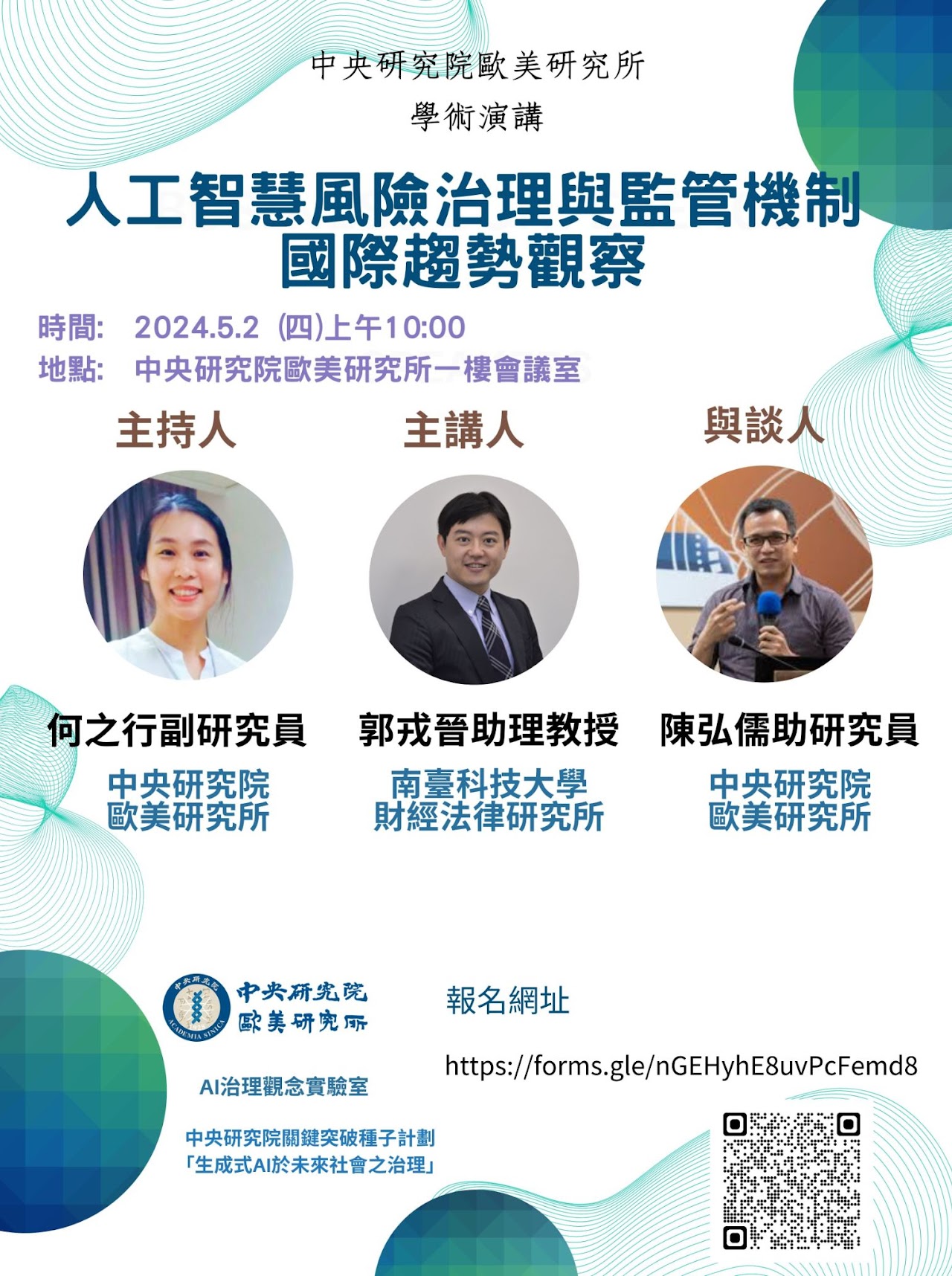
Observation on International Trends in Artificial Intelligence Risk Governance and Supervision Mechanisms
Topic: "Observation on International Trends in Artificial Intelligence Risk Governance and Supervision Mechanisms" Speaker: Dr. Jung-Chin Kuo, Assistant Professor, Graduate Institute of Financial and Economic Law, Southern Taiwan University of Science & Technology Moderator: Dr. Chih-hsing Ho / Associate Research Fellow, Institute of European and American Studies, Academia Sinica Discussant: Dr. Hung-Ju Chen / Assistant Research Fellow, Institute of European and American Studies, Academia Sinica Abstract: With the expansion and diversification of artificial intelligence applications, the problems caused by this new technology have also increased. As the risks increase, the regulatory thinking of artificial intelligence has gradually shifted from self-regulation to other-regulation, and there is a trend towards emphasizing other-regulation. This lecture will share the development context and trends of international artificial intelligence risk governance, as well as the differences in the promotion of artificial intelligence regulatory mechanisms in major countries at present, and then think about the current situation of our country, corresponding positions and issues that should be carefully considered. Date & Time: Thursday, May 2, 2024, 10:00 AM Venue: 1F Meeting Room, Institute of European and American Studies, Academia Sinica
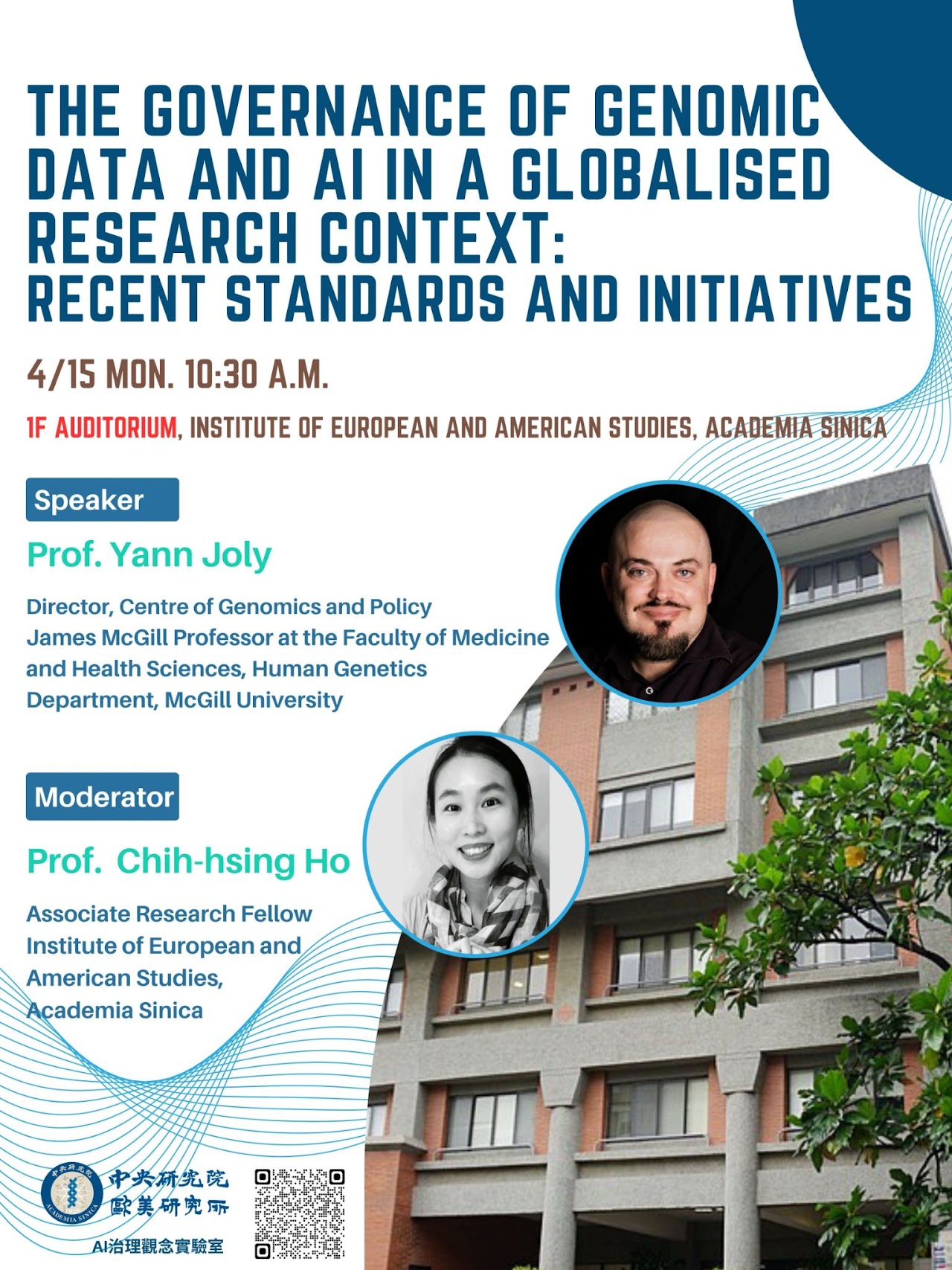
The Governance of Genomic Data and AI in a Globalised Research Context: Recent Standards and Initiatives
Topic: "The Governance of Genomic Data and AI in a Globalised Research Context: Recent Standards and Initiatives" Speaker: Prof. Yann Joly, James McGill Professor and Director of the Centre of Genomics and Policy, McGill University Moderator: Dr. Chih-hsing Ho / Associate Research Fellow, Institute of European and American Studies, Academia Sinica Abstract: Over the last two decades, genomic science and technologies have achieved important breakthrough whose effect have started to impact patient care. Given this success, biobanks and genomic database projects have multiplied in numbers and grown in scope. These large genomic research projects now store petabytes of data on the cloud. These projects require a well thought out governance structure to ensure that they are legally compliant, ethically sound and, ideally positioned to yield public benefits. International organizations, new and old, such as the World Health Organization, the UNESCO International Bioethics Committee, The Global Alliance for Genomics and Health and the International Society for Biological and Environmental Repository (ISBER) have sought to provide these new kinds of research projects policy frameworks and guidance on good practices for genomic projects. The current presentation will focus on recent initiatives to tackle three major developments faced by genomic researchers: 1) streamlining the data visiting governance model, 2) developing meaningful policies to address the challenges raised using AI in genomics and, 3) points to consider for achieving greater diversity in genomics datasets. It will identify the stage of development of these initiatives, possibilities for researchers to get involved, and will present the policies and tools that are already available for the community to use. Date & Time: Monday, April 15, 2024, 10:30 AM Venue: 1F Auditorium, Institute of European and American Studies, Academia Sinica
The Legislative Trends and International Practices of Facial Recognition Technology: Models, Features, and Driving Forces
Topic: "The Legislative Trends and International Practices of Facial Recognition Technology: Models, Features, and Driving Forces" Speaker: Dr. Yi-Li Lee, Assistant Professor, Institute of Technology Law, National Tsing Hua University Moderator: Dr. Hung-Ju Chen / Assistant Research Fellow, Institute of European and American Studies, Academia Sinica Discussant: Dr. Chih-hsing Ho / Associate Research Fellow, Institute of European and American Studies, Academia Sinica Date & Time: Wednesday, March 27, 2024, 10:00 AM Venue: 1F Meeting Room, Institute of European and American Studies, Academia Sinica
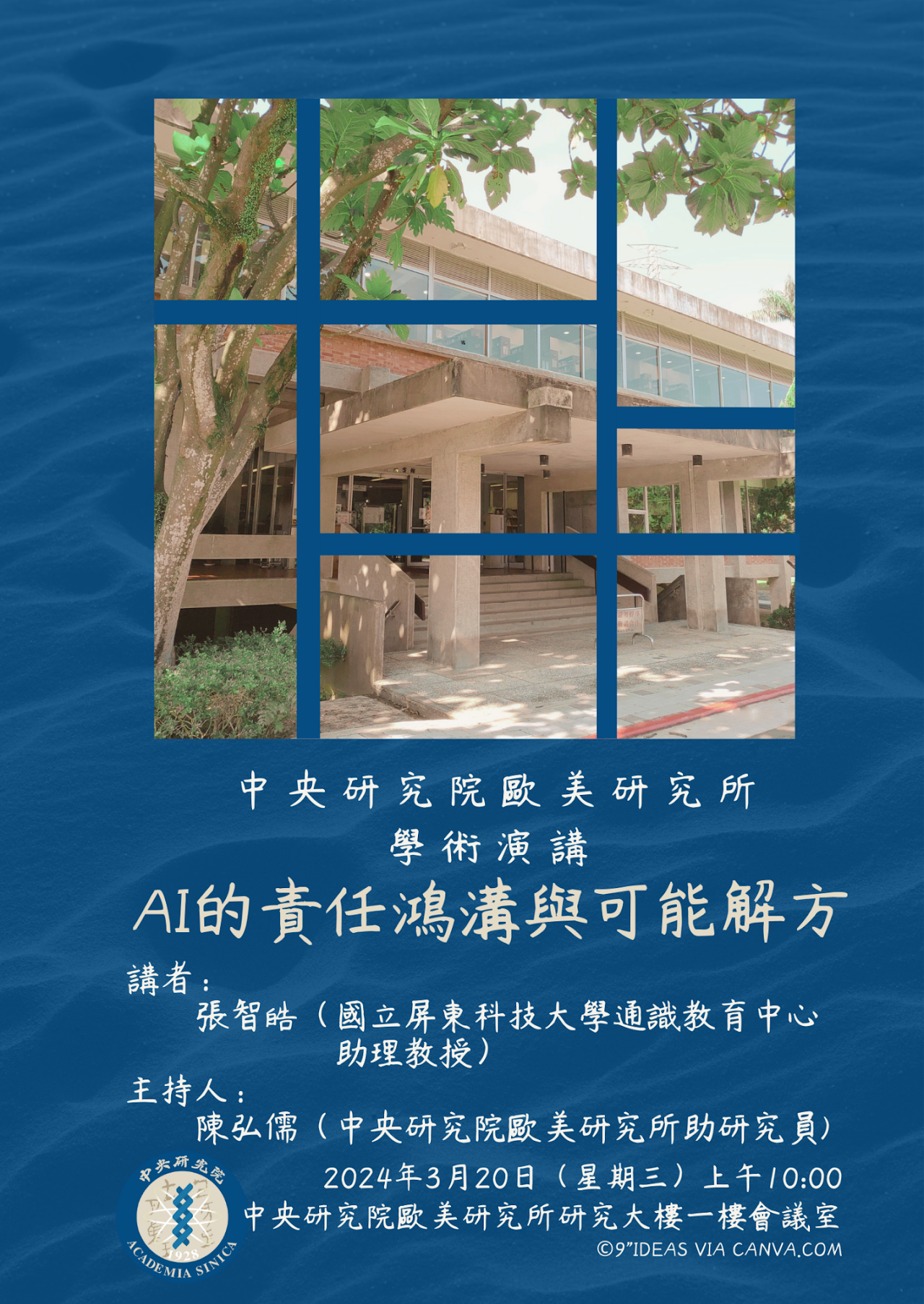
The Responsibility Gap of AI and Possible Solutions
Topic: "The Responsibility Gap of AI and Possible Solutions" Speaker: Dr. Jhih-Hao Jhang, Assistant Professor, Center for General Education, National Pingtung University of Science and Technology Moderator: Dr. Hung-Ju Chen, Assistant Research Fellow, Institute of European and American Studies, Academia Sinica Date & Time: Wednesday, March 20, 2024, 10:00 AM Venue: 1F Meeting Room, Institute of European and American Studies, Academia Sinica